- The Next Input by Cylentis AI
- Posts
- 🎮 The Next Input — Issue #125
🎮 The Next Input — Issue #125
When AI Writes You a Ticket

Aaron Bost
February 04, 2026
In partnership with


⚡ The Briefing — 60 sec
Intel will start making GPUs, taking on a market dominated by Nvidia
Easy to write them off—but in this era, strong leadership plus a stubborn team can still bend markets. Let’s see if Intel remembers how to fight.Lawyer warns AI traffic camera errors are on the rise
When AI gets it wrong, you don’t get an apology—you get a fine and three demerit points. Accountability suddenly feels very real.Anthropic is about to drop Sonnet 5 during Super Bowl week
Word on the street: smarter than Opus 4.5 and cheaper. If true, things are about to get spicy.
🛠️ The Playbook — The High-Stakes AI Decision Layer
Mission Use AI in decisions that affect money, penalties, or outcomes—without letting models become unaccountable judges.
Difficulty Advanced
Build time 3–4 hours
ROI Reduces costly AI errors and builds defensible decision trails when things go wrong.
0) Why This Matters
As AI moves into GPUs, infrastructure, enforcement, and governance, mistakes stop being theoretical.
A misclassified image isn’t a bug—it’s a fine, a lawsuit, or a regulator knocking.
This layer ensures AI advises decisions, never silently enforces them.
1) Architecture
Component | Tool | Purpose | Owner | Failure mode |
|---|---|---|---|---|
Signal intake | Sensors / logs / feeds | Capture raw AI inputs | Platform | Garbage-in decisions |
Decision advisor | Claude 4.5 Sonnet | Generate recommendations | Eng | Overconfident output |
Second-pass checker | GPT-5-mini | Detect edge cases & ambiguity | Risk | Missed false positives |
Confidence gate | Rules engine | Block low-confidence actions | Ops | Silent enforcement |
Evidence store | Immutable logs | Defensible audit trail | Legal | “Model said so” excuses |
2) Workflow
Input captured: Image, reading, or event is ingested.
Primary analysis: Claude 4.5 Sonnet evaluates and produces a recommendation, not an action.
Second pass: GPT-5-mini checks for ambiguity, known failure patterns, or confidence gaps.
Decision gate:
Confidence ≥ threshold → human-review-ready recommendation
Confidence < threshold → auto-block + escalation
Human confirmation: Required for any punitive or financial outcome.
Evidence logged: Inputs, outputs, confidence, and final decision are stored immutably.
3) Example Prompts
Primary Analysis (Claude 4.5 Sonnet)
Analyse this input and provide:
- recommended interpretation
- confidence level (0–1)
- potential ambiguity
Do not assume enforcement authority.
Secondary Check (GPT-5-mini)
Review this recommendation for:
- known failure modes
- edge cases
- insufficient evidence
Flag if confidence is overstated.
Eval Prompt (Claude 4.5 Haiku)
Evaluate the decision chain.
Return PASS / FLAG / FAIL.
If FLAG or FAIL, explain the weakest link.
4) Guardrails
AI never triggers penalties autonomously.
Confidence thresholds are enforced before outcomes.
All decisions are explainable post-hoc.
Appeals and overrides are first-class features.
5) Pilot Rollout — 4 hours
Select one AI-assisted decision with real consequences.
Instrument confidence scoring and logging.
Add a second-pass checker.
Run historical cases through the pipeline.
Identify false positives caught by the gate.
Go live with human confirmation enforced.
6) Metrics
False-positive decisions caught pre-action
Average confidence score vs outcome accuracy
Appeals upheld (should drop)
Time-to-decision with safeguards
Regulator or legal review readiness
Pro Tip: If AI can’t explain itself clearly, it shouldn’t be allowed to decide anything expensive.
🎯 The Arsenal — Tools & Platforms
Claude 4.5 Sonnet / Sonnet 5 (soon) · High-quality primary reasoning with confidence scoring · https://anthropic.com
GPT-5-mini · Fast second-pass validation and edge detection · https://openai.com
OPA (Open Policy Agent) · Enforce decision thresholds and blocks · https://www.openpolicyagent.org
PostgreSQL (Immutable Tables) · Evidence and audit trails · https://www.postgresql.org
Copy-paste prompt block:
You are advising a high-stakes decision.
Recommend—do not enforce.
State confidence explicitly.
If evidence is weak, say so.
💡 Free Office Hours
Want help implementing anything? Book a free 15-minute Office Hours slot—no sales pitch, just workflows solved.
6 AI Predictions That Will Redefine CX in 2026
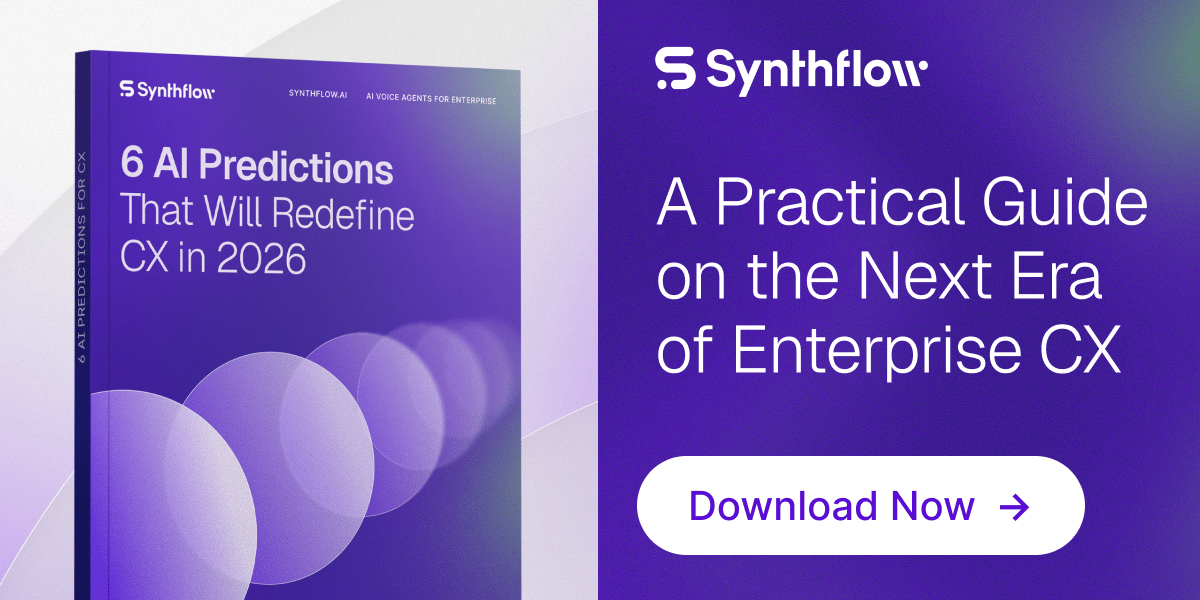
2026 is the inflection point for customer experience.
AI agents are becoming infrastructure — not experiments — and the teams that win will be the ones that design for reliability, scale, and real-world complexity.
This guide breaks down six shifts reshaping CX, from agentic systems to AI operations, and what enterprise leaders need to change now to stay ahead.
🕹️ Game Over
AI can suggest. Humans must decide.
— Aaron Automating the boring. Amplifying the brilliant.
Subscribe: https://cylentisai.beehiiv.com/subscribe