- The Next Input by Cylentis AI
- Posts
- The Next Input — Issue #100
The Next Input — Issue #100
100th! Issue

Aaron Bost
December 10, 2025

Gotta celebrate even the small things in life! 🥳
⚡ The Briefing — 60 sec
OpenAI, Anthropic, and Block join Linux Foundation push to standardise the AI agent era
When rivals start agreeing on standards, it means two things: the space is maturing—and everyone wants to win the platform war.Nike debuts AI-designed trainers for mass retail
Not gonna lie… I might actually cop a pair. If the AI has taste, we’re eating.Anthropic and Accenture announce major partnership to scale enterprise AI
And people still think the bubble’s about to pop? Yeah… not so fast.
🛠️ The Playbook — The AI Agent Governance Hub
Mission Build a unified governance layer that tracks, audits, and standardises all AI agents inside your organisation—before you end up with 50 agents and zero control.
Difficulty Advanced
Build time 3–5 hours
ROI Future-proofs your AI stack and prevents agent sprawl from turning into chaos.
0) Why This Matters
The agent era is here—and it’s moving fast.
With OpenAI, Anthropic, and Block joining a Linux Foundation standardisation push, the writing’s on the wall:
Every company will run multiple agents.
Most companies will mismanage them.
This hub fixes that before you scale yourself into a compliance nightmare.
1) Architecture
Component | Tool | Purpose |
|---|---|---|
Agent Registry | Airtable / Postgres | List all agents, roles, permissions |
Eval Engine | Claude 4.5 Haiku | Check behaviour, safety, boundaries |
Router | GPT-5-mini | Decide which agent handles which task |
Audit Layer | Supabase Logs | Track actions, prompts, decisions |
Policy Store | Notion / Confluence | Define allowed + restricted behaviours |
2) Workflow
Every agent registers on creation with metadata:
purpose
model family
allowed data
risk level
owner/team
When a task is sent to the system, GPT-5-mini routes it to the correct agent.
Agent runs → returns output → gets evaluated by Claude 4.5 Haiku:
accuracy checks
safety compliance
rule violations
Logs are written to Supabase for auditing.
Monthly review generates:
high-risk behaviour
drift analysis
permission creep
agent redundancy
Governance rules update automatically based on patterns.
3) Example Prompts
Agent Evaluation (Claude 4.5 Haiku)
Evaluate this agent output for:
- accuracy risk
- safety concerns
- breaches of defined behaviour
Return:
- Pass / Flag / Fail
- A 1–2 sentence reason
Routing Prompt (GPT-5-mini)
Given this task and the registry of agent capabilities,
select the best agent.
If none are suitable, return "no valid agent".
Keep reasoning minimal.
4) Guardrails
Agents cannot self-modify or escalate permissions.
Every agent requires an assigned human “owner.”
Logging is mandatory—no silent actions.
High-risk agents get sandboxed by default.
No auto-creation of new agents without governance approval.
5) Pilot Rollout — 4 hours
Build the Agent Registry in Airtable.
Define three pilot agents (ops, summarisation, retrieval).
Set up routing and eval prompts.
Run 20 tasks through the system and audit the logs.
Map failure patterns → update rules.
Expand to 10–15 agents across departments.
6) Metrics
Number of agent actions logged
Frequency of “Flag” or “Fail” events
Time saved via routing vs manual assignment
Permission creep incidents caught
Redundant agents retired
Pro Tip: Create “agent families”—groups of similar agents that evolve together. Makes scaling easier and safer.
🎯 The Arsenal — Tools & Platforms
LangSmith · Agent evaluation, traces, and behaviour monitoring · https://smith.langchain.com
Supabase Auth + Logs · Central audit trail + access control · https://supabase.com
Retool · Build internal governance dashboards fast · https://retool.com
OpenTelemetry · Extend logging + trace events across agent workflows · https://opentelemetry.io
Copy-paste prompt block:
You are the Agent Governance Layer.
For every agent event:
- classify risk
- check compliance
- log actions
Return Pass / Flag / Fail.
💡 Free Office Hours
Want help implementing anything? Book a free 15-minute Office Hours slot—no sales pitch, just workflows solved.
Wall Street Isn’t Warning You, But This Chart Might
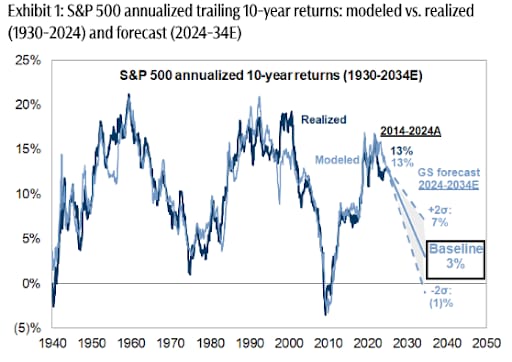
Vanguard just projected public markets may return only 5% annually over the next decade. In a 2024 report, Goldman Sachs forecasted the S&P 500 may return just 3% annually for the same time frame—stats that put current valuations in the 7th percentile of history.
Translation? The gains we’ve seen over the past few years might not continue for quite a while.
Meanwhile, another asset class—almost entirely uncorrelated to the S&P 500 historically—has overall outpaced it for decades (1995-2024), according to Masterworks data.
Masterworks lets everyday investors invest in shares of multimillion-dollar artworks by legends like Banksy, Basquiat, and Picasso.
And they’re not just buying. They’re exiting—with net annualized returns like 17.6%, 17.8%, and 21.5% among their 23 sales.*
Wall Street won’t talk about this. But the wealthy already are. Shares in new offerings can sell quickly but…
*Past performance is not indicative of future returns. Important Reg A disclosures: masterworks.com/cd.
🕹️ Game Over
One agent is cool. Ten agents is power. Fifty agents without governance is chaos.
— Aaron Automating the boring. Amplifying the brilliant.
Subscribe: https://cylentisai.beehiiv.com/subscribe